The Last Journey of Stella
November 29, 2025
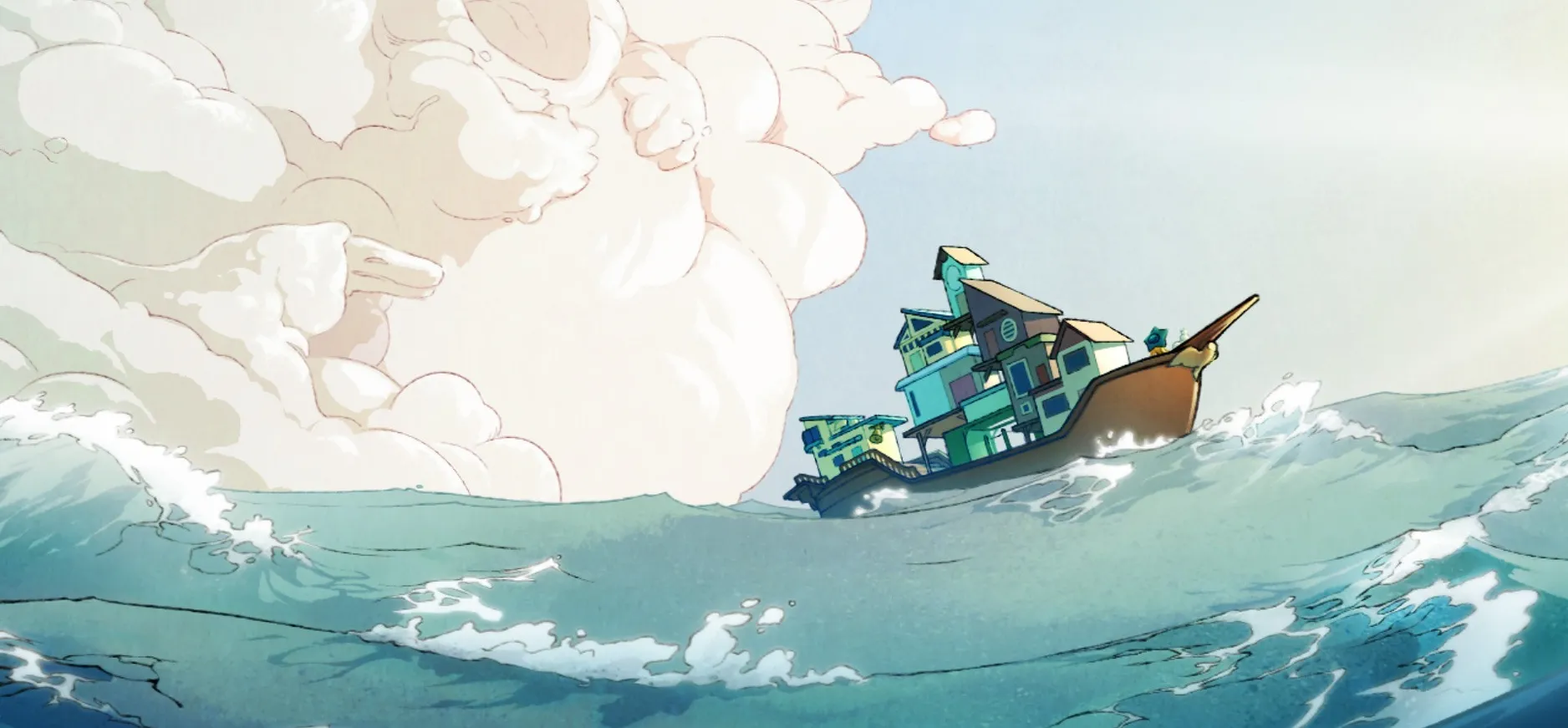
I finished the game Spiritfarer. Spoiler alert: if you plan to experience that game first-hand, maybe close this page and do so. Otherwise, let me explain a bit about it first.
The player controls Stella, who is the captain of a boat that transfers spirits to the Everdoor—the place where their lives come to an end. These spirits symbolize people who are in the final stage of life. Stella’s task is to provide end-of-life care for them. Once the spirits are ready, she rows the boat and accompanies them to the Everdoor.
As the story moves along, it gradually reveals that this whole world of sailing and caring for dying patients is also a memory of Stella’s life as a palliative nurse. Now she herself is dying too. Those spirits were the people who were important in her life, and whom she had cared for before. Transferring them one by one to the Everdoor is like replaying her own life, and preparing for her own journey to the Everdoor.
When I finished the game, I was expecting some intense emotions—maybe sadness, regrets, anger, or grief. But the ending was very peaceful. It was almost as if going to the Everdoor had become such a routine for her that when it was finally her turn, she didn’t have strong feelings anymore.
I have to admit that I felt a bit disappointed by the ending. It’s a great game overall, but I wanted the ending to feel more significant.
If I had the ability to extend the game after everyone leaves the boat, I would continue Stella’s journey. Maybe something like this, in Stella’s own voice:
At the end of the game, everyone is gone from the boat.
I don’t need to go anywhere anymore. There’s no point in watering the vegetables, cutting wood, or cooking food. Now I’m alone with myself. What should I do?
Maybe I’ll visit the old towns. But they’ve become quiet too. My old friends—the Shark, the Raccoon—are gone as well.
One day I wake up and the weather turns extreme. Big winds are coming. I go to the navigation room and try to steer the boat, but it doesn’t work. The boat is drifting with the wind.
Right. It’s time to reduce the height of the boat.
I go to the blueprint table and start reorganizing the houses, but I can’t get the height low enough. Then a new action appears: I can now destroy some of the boat’s constructions.
Doing so helps lower the overall height and lets me control the boat again.
Each time I destroy something, Hades’ whisper comes with the wind:
“Oh, your cute sheep. Where should they go now?”
“That little snake’s house—what do you need it for?”
“That art exhibition… hahaha. Nothing lasts. Not even art.”
The next day I wake up to another storm. This time, besides the wind, there are huge waves crashing into the boat and damaging it. I use the remaining resources to patch up the boat and the houses.
But I lose control of the boat again.
Now it drifts in random directions, sometimes stopping at islands. I can still go ashore and gather resources. I want to ask for help, but no one is around.
Gradually the houses start breaking apart, one by one, despite my best efforts.
Finally the boat is gone. I’m left with only a raft—and one house of my choice.
That house looks a bit different now. It’s messy, stuffed with things from my bag. I can’t carry too much anymore. I had to throw away vegetables, fish, dishes, ores, and other collectibles just to keep the raft afloat.
Well… living a simple life isn’t that bad.
The raft keeps getting damaged, and I keep throwing things away. My backpack keeps shrinking.
Eventually the last house is destroyed. I’m sitting on a tiny raft with nothing but myself.
The wind, the waves, the lightning—they’re still coming. But now there’s nothing left to destroy.
While sitting there, observing everything, I remember Summer’s song, and her teaching of meditation.
So I start playing the guitar. I start meditating.
The wind begins to subside. The waves retreat. The world gradually becomes peaceful again, and I regain control of the raft.
With music and meditation, I travel a bit and repair the raft.
I meet Hades again.
This time he isn’t as intimidating. He still mocks me from time to time, but there’s a bit more respect in his voice.
“Well, what a small boat. I thought you always dreamed big. But a small one isn’t that bad. People always want more than what they need.”
“Hey, you survived the storm. Not bad. It’s just part of the process.”
“Since no one is asking anything from you anymore… where are you going now?”
It’s not a big boat anymore, but it’s strong and nimble. It travels very fast.
Now I can still revisit the old places. When I meditate, I can recall old memories—not only at the shrines, but at other meaningful places too, as if they all have stories to tell.
The blueprint table has become a scrapbook.
Each time I revisit a memory, a design appears in the book. It still requires resources to build, but only simple ones—sawdust, any wood, any thread. Nothing fancy.
One by one, I build a small house on the boat.
This time, I think the house is for myself.
It’s simple, but cozy. With that house, and all the memories inside it, I’m ready to go to the Everdoor.
At the Everdoor, Hades is standing at the gate, expecting me.
He’s silent now, no longer teasing. Maybe he’s welcoming me with respect.
The Everdoor is still peaceful.
And this is the end of the game.
I would love this ending. In fact, I’m secretly proud of myself for imagining all of this—so that Stella could go through the destruction of her outer world, meet her real self, and finally transcend death. Awesome, right? Isn’t this much better than the uneventful, undramatic, almost boring ending of quietly rowing to the Everdoor alone? Yes—that’s how I wanted Stella’s life to be.
Or maybe… that’s just how I wanted my life to be.
Suddenly something struck me. I started to feel the realness of the original ending, and the quiet tragedy within it. I’ve been assuming that transcendence—living a highly conscious, reflective life—is the ultimate goal. But not everyone is lucky enough to experience it. If I see Stella as a symbol of a long-term caregiver, they sacrifice so much for others. Their lives are filled with the needs of other people. Yes, it would be nice if they could spare more time and attention for themselves. But they are often buried under the chores of life. Someone has to do it, right? I didn’t fully appreciate this until I became a father myself. My own life now cycles through work, housework, and the kid. Maybe the game’s ending is actually more real than my imaginary one. Life is rarely like a Hollywood movie. Even at the end, it’s often more peace than drama.