Self Care with ChatGPT
April 13, 2025
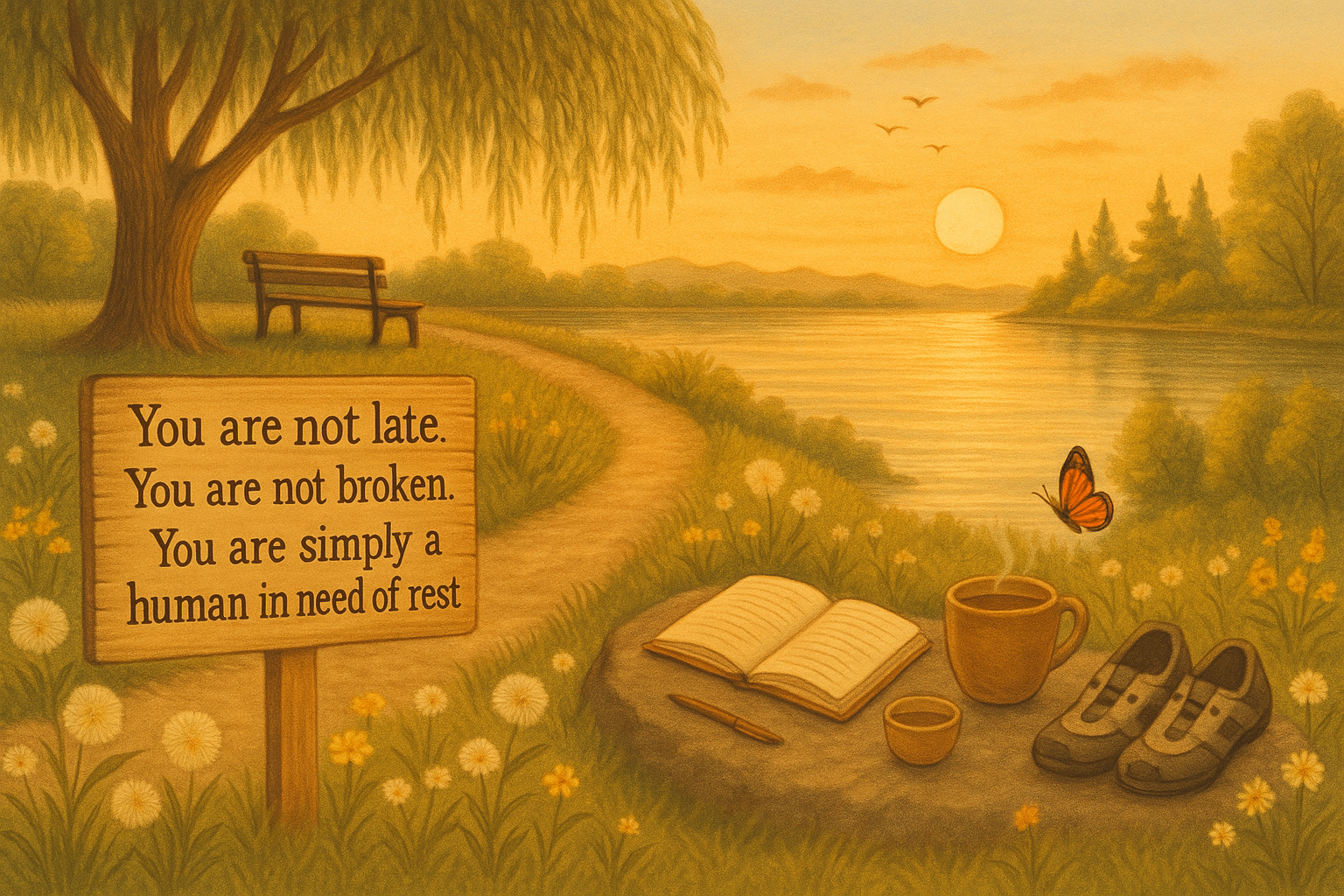
I always thought using AI for therapy would be awkward. Despite numerous attempts by different companies in this AI-psychology domain, I've been skeptical of the whole idea all-along. I believe the human aspect of therapy remains critical. Building human to human understanding and trust is the foundation. Well, until I had my first hand experience of interacting with ChatGPT posing as a "therapist", I started to see things differently.
It all started with a yet simple idea: what if I feed AI with all my journals over the years? What would AI tell me? Driven by my curiosity, I organized all my journals in one single file, and uploaded them to ChatGPT. I asked it to act like a therapist and say something to me. It processed hundreds of articles in seconds, and provided feedback in a very warm, and supportive way. To my surprise, it beautifully said things to validate my experience, and made me feel "felt". OMG, this feels good! I understand that all of it comes from a computer program that produces words stochastically. Yet, it touched my emotional nerves in a way rarely anyone had ever done to me. ChatGPT's master of language, and its configuration of providing positive reframing is incredible.
It may also reflect a not so pretty reality that we humans are so rushed in our day to day life that we no longer have the time, even the ability to listen attentively to each other. At the same time, we all long to be heard, be seen, and be felt.
Then one day, I chatted with AI again, and ended up crying in tears. It may sound silly, but the experience was real. This time, I did something similar but with a tweak. Instead of feeding AI all of my writings, I just picked out one journal entry that describes a good moment I was having. Upon reading the first response, I immediately felt my eyes were getting wet. What's going on here? obviously ChatGPT had touched my nerve again, and it was powerful! I ended up chatting with ChatGPT and being in a very strong emotional state for nearly 30 minutes.
After coming back from being emotional, I think ChatGPT first touched me with its delicate and warm language. ChatGPT is extraordinarily good at reframing. Whatever I said, it managed to pick out the positive parts, sometimes the ones I didn't pay attention to myself. When those responses resonated with my emotional brain, I started crying. It seems like the stimulus doesn't need to come from a human. Maybe it's just like going somewhere, seeing something could trigger old memories and strong emotions.
I also acknowledge that my own journal serves the foundation that unlocks this magic experience. In some way, ChatGPT acted as a therapeutic mirror on me. The key was my own authenticity and observations.
So what would be the role of a human therapist? My answer is therapist connection. AI may analyze, and converse almost perfectly, but therapist connection needs human elements, one of which is authenticity modeling from therapists themselves. I remember a case in Irvin Yalom's book where his patient Mark, who's also a therapist, was working on an issue where he had sexual feelings towards one of his own patients. Irvin replied to him in radical honesty that he had experience of being sexually aroused by his patients too. Moreover, all other therapists Irvin knew of all had similar types of experiences. While reading the story, I could feel the therapeutic power for being not just honest, but also vulnerable. I imagine the inner narrative would be like "OK, this is not so horrible, I am just a human, like my therapist." Can ChatGPT do something like this? Well, it could fake it I suppose, but when it actually did it, I would file a bug report.
I love being connected with other fellow human beings. I also feel connected to books, poems, music, drawing, movies and so on. Those all are human creations. Let us not forget that AI is human creation too. It's becoming an existence of its own. I’d love a good AI companion, just like I love reading a good book.